How the baby that ate its own head can help you get readers and links
Every day the baby helps bloggers, columnists and journalists get front page exposure for their content . Well, OK, it’s not really the baby. It’s that undeniable urge that compels us to read the article about the baby. It’s the same thing that killed the cat…yep folks, you’ve got it - it’s…curiosity.
In his book “Tested Advertising Methods,” John Caples lists curiosity headlines as one of three successful headline types. So, let’s familiarize ourselves with the curiosity factor and start reeling in those links and readers.
Irresistible headlines due to curiosity
These three headlines were taken from Digg’s Home page. In fact, more than 50% of the home page articles (at the time this article was written) relied heavily on the curiosity factor.
Blueprint For Dictatorship - Notice how the contrast between the feelings of order/security we associate with blueprints and the feelings of fear/instability we associate with dictatorship make this headline irresistible. Isn’t this headline much better than the obvious - “America is becoming a dictatorship”.
Anti-piracy group pirated my data - It’s the tale of David catching the thieving Goliath red-handed. You absolutely have to know what happened. This title is all good.
Marijuana Shrinks Tumors, Government Knew In 1974 - If you are a cancer patient, a marijuana smoker or a fan of conspiracy theories, you cannot resist reading this article.
How to use the curiosity factor to create irresistible blog posts
This technique has three steps:
- Mine Digg/Reddit/Netscape for a curiosity headline (not news headlines) - go to the Digg home page. Look at the articles that became popular in the last 7/30 days. Select one that is not news-oriented.
- Figure out what makes this headline unique - Try to understand why this headline is so compelling and if there is an underlying pattern to its drawing power.
- Remix the headline - Use the pattern to create new headlines.
Let’s do a couple:
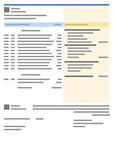
| Original Headline: |
How to tell if you are a fanboy |
| Underlying Pattern: |
How to tell if [you/someone close to you] are/is a [something that no one wants to be] |
| Remixed headlines: | How to tell if you are a cold fish |
| How to tell if your boyfriend is a male chauvinist pig | |
| How to tell if you are still stuck in the 80s |
Let’s try another one:
| Original Headline: |
Condemned To Google Hell |
| Underlying Pattern: |
Condemned to [Do no evil type of object/entity] Hell |
| Remixed headlines: | Condemned to Hawaii Hell |
| Condemned to Candy Store Hell | |
| Condemned to George Clooney Hell |
So start weaving curiosity into your headlines and you’ll see those readers and links rolling in.
Bookmark this article at del.icio.us »
Announcing PostWisdom for FireFox: Your Personal Blog Writing Coach
Imagine reading an article about blogging from your favorite blogging guru. After a couple of sentences you become excited. The article is really good. It contains an amazing technique. A technique that will make you a better blogger. Using this technique, you immediatly whip out a shining blog post.
When it’s time to write another post you use the technique again, and again the results are great. But since you don’t want to be monotonous/boring, you avoid using that technique for a couple of weeks. And then a new really good article captures your attention and the old technique is forgotten.
I’ve been suffering from the “using only the latest writing advice” syndrom for quite a while now. And that is why we developed PostWisdom. PostWisdom is a FireFox Plugin intended to help bloggers remember and use the best writing techniques. It is easy to use and free.
You can download it and read about it here.
I am looking forward to hear what you think about it, so please, leave a comment.
Update: It seems there was a problem with the download link. My apologies. It’s working now. Thank you Dan for the heads up.
Bookmark this article at del.icio.us »
Five blogging tools that every blogger will use in 2007
Why is it that some bloggers are 10 times more productive than others?
Like programming, blogging is an occupation in which huge variations exist between the best and the merely average. Joel Spolsky of the famed Joel on Software made a historic post on the difference between the best programmer and the average programmer. I strongly recommend that you read Joel’s post. While doing so, replace the word “programmer” with the word “blogger.”
So how do you become a master blogger?
The secret of the kung fu master
Imagine a kung fu master during his daily practice session. He moves with accuracy and grace. Every strike is perfect and flows seamlessly into the next. But the most amazing part is that the kung fu master seems to be in another world, contemplating the philosophy of martial arts while his body automatically performs the moves.
How is kung fu relevant to blogging? Like the kung fu master, you should control the tools of your trade to the point that using them is second nature. Then you can focus on the core of the blogging art–thinking!
Here are the five essential tools you will have to master to become a kung fu blogging master:
Finding interesting things to blog about
Tool #1: Del.icio.us
When reading your RSS feeds and surfing the net, you often come across things you can blog about. Use del.icio.us to bookmark them and use them in your blog later. And that’s not all. By subscribing to the Del.icio.us tag RSS feeds, you can see what other people have bookmarked on the tags that interest you and use that for your blog. By doing so, you use the entire del.icio.us user group as your personal scouts!
Tool #2: Technorati
Also subscribe to the tag RSS feeds on Technorati. This is very similar to Del.icio.us, but you get to read everything blogged about the keywords that interest you.
Think everywhere
When you sit in front of your computer, you start thinking about headlines, subtitles, and all the other stuff that make your blog posts great. But don’t you hate it when you think of a great idea for a title or a joke, and by the time you get to your computer you have forgotten about it? Wouldn’t it be great if you could blog everywhere?
Tool #3: online word processors
By using Google Docs, Zoho, or one of the many other online word processors, you can write your post at work, from home, when visiting friends–wherever there is a computer connected to the internet.
Warning: Your spouse, family, and friends may not like this technique.
Get your blogging groove on
Blogging is hard work. To really be effective, you have to be in the right mood. I use a special “substance” to clear my mind.
Tool #4: ZeFrank
It’s enough to watch an episode of the ZeFrank daily show to forget all your troubles, get a good laugh, and enter that blogging state of mind.
Become a master wordsmith
Tool #5: Cogniview’s ultimate copywriting tool
During the first quarter of 2007, we will be launching a new copywriting software tool to serve you, the blogger. This tool (yet to be named) will allow you to write a brilliant post every time. This tool will be the equivalent of having Darren and Brian as your personal advisers.
How can you get this tool?
Easy, just subscribe to our RSS feed. Once the tool has been released, we will post it here and you will be able to download it, free!
This post is participating in the ProBlogger Group Writing Project - Reviews and Predictions.
Happy holidays, everyone,
Yoav